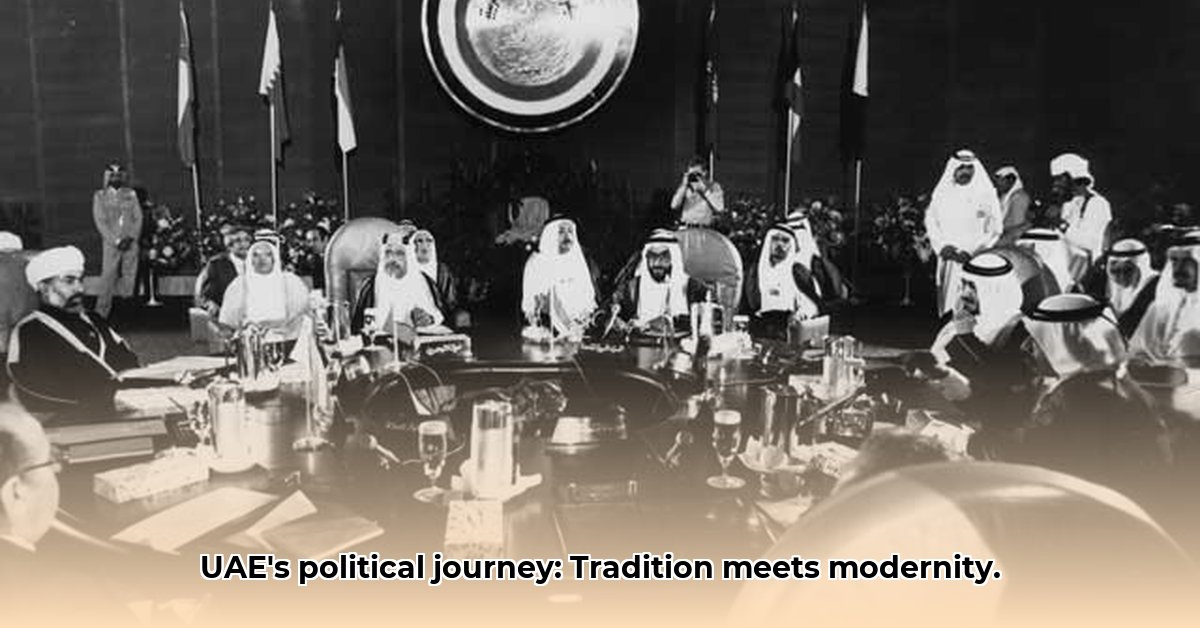
The United Arab Emirates (UAE) presents a fascinating case study in the evolution of political representation, blending deeply rooted traditions with modern democratic reforms. This journey, from customary consultation to a partially elected Federal National Council (FNC), reflects a unique path towards greater citizen participation. Understanding this history provides valuable insights into the UAE's ongoing political development. For more information on the FNC, visit the FNC website.
From Shura to the FNC: A Gradual Transition
For centuries, the concept of Shura (consultation) formed the bedrock of governance in the UAE. Tribal elders and respected community figures advised leaders, fostering a tradition of incorporating diverse voices into decision-making. This informal system laid the groundwork for the more formal structures that followed. However, how effectively did this informal system represent the population as a whole? Further research into the historical efficacy of Shura would paint a fuller picture.
The establishment of the FNC marked a significant turning point. Initially, all FNC members were appointed, reflecting the existing power structures. However, the introduction of partially elected membership in 2006 represented a pivotal shift. The gradual increase in the number of directly elected members showcases a conscious effort to incorporate more public input into the legislative process. This evolution, while incremental, signals a broader movement toward greater citizen involvement, aligning with global trends in democratization, yet maintaining a unique Emirati approach. What factors influenced the decision to introduce partially elected FNC membership? An exploration into the political dynamics of this era would be beneficial.
The FNC: A System of Mixed Representation
The structure of the FNC itself is a significant feature of the UAE's political landscape. It operates with a bicameral system, comprising both appointed and elected members. Appointed members, often selected based on expertise and experience, provide continuity and connect the government to diverse sectors of society. Elected members, on the other hand, represent the direct voices and concerns of the citizenry. This blend seeks to balance established authority with the growing demand for greater public participation.
This dual system presents interesting questions regarding the balance of power and the effective representation of various societal interests. How does the presence of appointed members influence the legislative process? Further analysis of the decision-making dynamics and legislative outcomes would enhance our understanding of this complex interplay. A quantifiable metric to measure the influence of appointed vs. elected members in legislative outcomes would be valuable.
The Role of the Majlis: Maintaining Traditional Engagement
Beyond the formal FNC, the Majlis (open forums) continue to play a vital role in citizen engagement. These traditional gatherings allow for direct interaction between leaders and the public, providing a platform for expressing concerns and fostering community dialogue. While the FNC provides a formal channel for political participation, the Majlis maintain a unique Emirati tradition of direct interaction, upholding cultural values while supplementing formal political channels. To what extent do the Majlis contribute to effective political feedback, and how can this informal mechanism be further leveraged?
Women's Participation: A Striking Example of Progress
The UAE has witnessed remarkable progress in women's political participation. Their growing representation within the FNC demonstrates a commitment to gender equality and inclusive governance. The mandated 50% representation of women in the FNC since 2019 stands as a powerful testament to the nation's social progress and its commitment to actively including women in political decision-making. This contrasts with many other countries in the region and globally. However, what are the longer-term consequences of this swift increase in women's representation on overall policy-making? A long-term study would be crucial in evaluating its impact.
Challenges and Future Pathways
Despite notable achievements, challenges remain. The pace of reform, while significant, is gradual. Some advocate for accelerated democratization and increased influence for the FNC in policy-making. The executive branch retains considerable power, leading to ongoing discussions about achieving a more balanced distribution of authority. What specific actions could potentially accelerate this progressive evolution while also preserving national unity and stability? A thorough analysis and data-driven projections would shed light on these critical considerations. What mechanisms can be implemented to increase the transparency and accountability of political decision-making?
Dr. Ayesha Al-Ali, Professor of Political Science, University of London: "The UAE's approach to political reform is a delicate balancing act, navigating between preserving cultural norms and adapting to global trends. The evolution of the FNC, while incremental, reflects this careful approach, and further research is needed to fully understand both its successes and its limitations.”
The UAE's journey toward more inclusive political representation is a dynamic and ongoing process. The interplay between tradition and modernity, between formal institutions and informal mechanisms, creates a complex yet fascinating political landscape. The future trajectory will depend on continued dialogue, critical analysis, and innovative approaches to balancing stability with the aspirations for greater citizen participation.